April 12, 2026
In the printed circuit board (PCB) supply chain, we often focus on line width and spacing, the number of layers, or surface treatments, yet we frequently overlook the core mechanical metrics that determine a PCB’s long-term reliability, durability, and overall yield: “peel strength” and “adhesion.” From the selection of copper-clad laminates (CCL) at the upstream stage to the shipment of finished PCBs at the downstream stage, these two metrics are absolutely critical for quality control throughout the entire process. In this technical column, we will delve into these two physical metrics that form the foundation of a PCB’s ability to withstand environmental stresses.
Although these two terms are often used interchangeably, they have distinct engineering definitions:
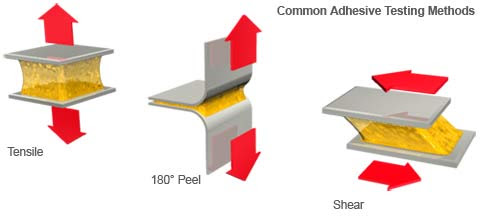
Together, these two characteristics constitute the PCB’s ability to withstand thermal stress, mechanical stress, and chemical corrosion. In telecommunications, automotive electronics, industrial controls, and high‑end consumer electronics, failure in either of these indicators is often a fatal defect that leads to immediate rejection.
Structurally, a PCB is a precision carrier formed by laminating multiple materials – insulating substrate, copper foil, resin (prepreg), solder mask – under high temperature and pressure. The bond between copper foil and substrate is the “structural foundation”; while the solder mask, legend, and plated layers ensure electrical insulation and protection.
Mechanism of Interfacial Bonding: The bond between copper foil and substrate relies on both “chemical bonding” and “physical anchoring”. The copper foil surface is roughened to create microscopic tooth‑like structures that mechanically interlock with the resin. The degree of resin cure, cross‑link density, and glass transition temperature (Tg) all directly affect the toughness of this interface.
What happens if bonding is insufficient?
The global PCB industry relies on the IPC standard system as its core validation framework. These standards unify sample preparation, test conditions, and pass/fail criteria, ensuring comparability of test results across the global supply chain:
2.4.8: Specifies the test method for copper foil peel strength.2.4.1: Specifies the cross‑cut tape test method for solder mask/coating adhesion.2.4.9: Evaluates adhesion after thermal stress exposure.For a PCB manufacturer, incoming CCL must be sampled for peel strength. Before shipment, finished boards undergo reliability re‑testing after thermal stress and moisture preconditioning. Automotive electronics, medical devices, and aerospace often require even more stringent tests.
As electronics move toward thinner, lighter, smaller form factors and higher frequencies, unprecedented challenges arise for peel strength and adhesion:
Peel strength and adhesion are not just cold, hard laboratory numbers; they are the “language of reliability” that runs through PCB design, material selection, manufacturing, assembly, and end‑use.
Understanding their failure mechanisms and industry value helps hardware engineers choose the right laminate grade early in the design phase. When facing challenges with high‑frequency materials, heavy‑copper processes, or high‑reliability projects, the eCloudPCB team has extensive experience in material characteristics and process parameter control, ready to help you ensure interfacial bonding from the very beginning – so that every board we deliver operates reliably.