April 3, 2026
Recently, the hottest topics of discussion—whether among manufacturers or buyers—have been “PCB manufacturers operating at full capacity” and “raw material shortages.” According to the latest forecast data from Prismark, a leading global PCB research firm, the global PCB market value is expected to exceed $95.7 billion in 2026, representing a year-over-year growth of 12.5%. In particular, the market size for AI server PCBs has doubled, with leading manufacturers’ high-end production lines operating at full capacity and order lead times stretching as long as 20 weeks. Meanwhile, orders for IC substrates have surged by a staggering 280% year-over-year. As the core carrier in high-end electronics manufacturing, PCBs are rapidly evolving toward higher density, higher frequency and speed, and greater reliability, driven by technological upgrades in industries such as AI computing power, advanced packaging, and electric vehicles (EVs). Behind this wave of hardware upgrades lies a key strategic metal with irreplaceable physical properties—tungsten—which is becoming a major bottleneck in high-end PCB manufacturing. The tight balance between supply and demand is reshaping the industry’s fundamentals.

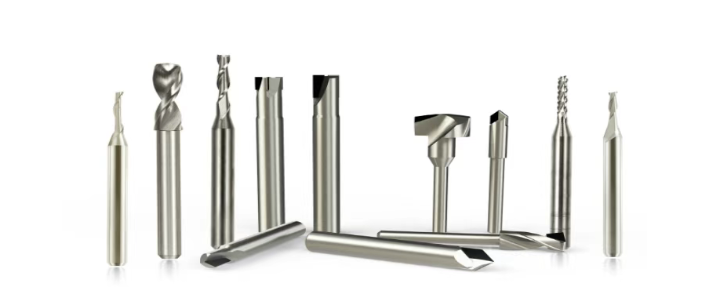
In PCB manufacturing, over 80% of tungsten consumption is concentrated in one critical consumable: Tungsten Carbide Drill Bits (commonly known as “tungsten steel” drill bits in the industry). They are currently the only mainstream consumable for mechanical drilling processes in PCBs.
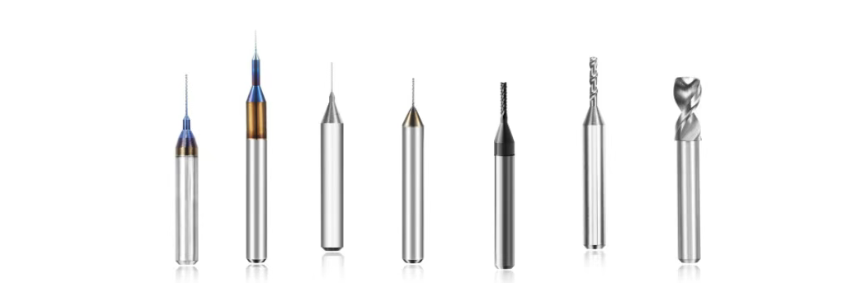 As the process evolves, the diameter of microvias in IC substrates, AI server high‑frequency boards, and advanced HDI boards has shrunk to 0.05mm, while drill spindle speeds have exceeded 200,000 RPM (200K RPM). Under such extreme physical conditions, traditional high‑speed steel (HSS) drill bits can no longer meet the requirements for precision and tool life.
Tungsten carbide drill bits have a hardness (HRA) of over 90, allowing hole‑position accuracy tolerances to be precisely controlled within ±2μm. They also maintain excellent rigidity and wear resistance under the high temperatures generated by high‑speed friction, making them perfectly suited for the extreme processes of advanced PCBs. In short, tungsten metal directly determines the processing precision and product reliability of high‑end PCBs, and currently there is “no alternative” in the industry.
The technology upgrade in the PCB industry has become a powerful engine driving the demand for tungsten metal. The core increase comes from two dimensions:
Beyond drill bits, the penetration rate of titanium‑tungsten alloy barrier layers in automotive‑grade PCBs is expected to jump significantly from 12% in 2023 to 38% in 2026. Meanwhile, the market for tungsten‑copper heat sinks used in high‑power PCBs is expected to see over 40% annual growth this year.
According to authoritative industry estimates, the global increase in tungsten metal demand from the PCB sector will exceed 2,200 metric tons in 2026, representing a year‑on‑year growth rate of 15%.
In stark contrast to the explosive growth in end‑user demand, the global supply of tungsten metal has almost no elasticity.
From the perspectives of NPI and supply chain management, the trend toward higher‑end PCBs is a long‑term, irreversible industrial direction.
On the demand side, the explosive growth in AI computing power, advanced semiconductor packaging, and electric vehicles creates a long‑term, highly certain increase in tungsten consumption. On the supply side, rigid constraints formed by policies and geopolitics have effectively locked in supply inelasticity. This structure of “soaring demand, locked supply” reinforces the underlying logic that raw material prices are “more prone to rise than fall.”
As hardware engineering partners of eCloud, when planning high‑end projects in the coming months, it is crucial to not only monitor the capacity and lead times of assembly factories but also to factor in the supply chain risks of critical consumables and raw materials. Early material planning will be essential to securing an advantage in this capacity‑scramble battle.