August 19, 2026
Examining PCB Stockpiling Strategies for the Second Half of 2026 Through International Copper Price Fluctuations
As the core medium for signal transmission and power distribution, copper's price trend directly determines the pricing tone of electronic products. Entering 2026, the copper market has evolved from cyclical fluctuations to "structural strategic scarcity."
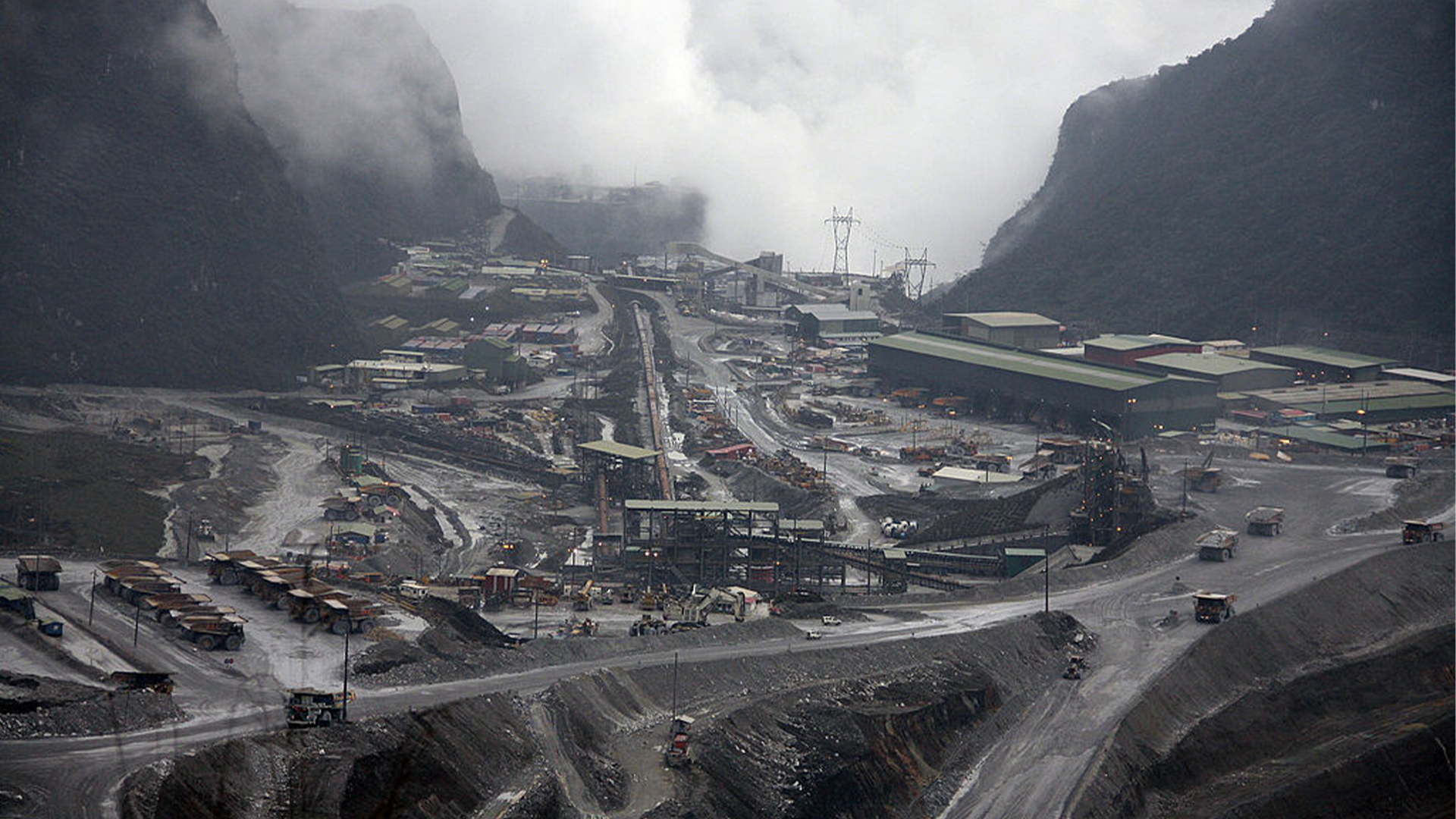
According to J.P. Morgan Global Research reports, copper prices climbed to historic highs in the first half of 2026 due to severe supply disruptions. A key factor in this tense situation was a major accident at the world's second-largest copper mine—the Grasberg mine in Indonesia. The Grasberg Block Cave section, which accounts for 70% of its forecast production, is not expected to gradually recover until the second quarter of 2026 after the disaster.
Compounding the problem, strike actions at Chile's Mantoverde mine further squeezed refined copper output. The global mine supply growth rate for 2026 is forecast at only +1.4%, a downward revision of approximately 500 kmt from earlier estimates. This low growth clashes intensely with the explosive growth in copper demand from AI data centers (with data center installations alone contributing approximately 475 kmt of demand in 2026).
Goldman Sachs research indicates that the U.S. government plans to implement tariffs of 15% to 25% on refined copper by mid-2026. This expectation led to massive panic stockpiling from late 2025 into early 2026, driving up premiums on the London Metal Exchange (LME).
While prices are expected to potentially fall back to around $11,000 in the second half of the year after tariffs are implemented, the long-term trend for copper prices to move towards $15,000 by 2035 is already set, driven by shifting demand structures towards green energy and AI infrastructure. For procurement PMs, this means that quotations in the second half of 2026 will directly bear the inventory costs of high-priced raw materials from the first half.
The industry is defining 2026 as the "Year of Material Shortages" for PCBs. The rapid iteration of hardware architectures has long outpaced the capacity expansion speed of the material supply chain.
As platforms like NVIDIA Blackwell Ultra and subsequent Vera Rubin push transmission rates towards 224 Gbps, Ultra-Low Profile copper foil (HVLP4) has become an indispensable substrate material. Manufacturing HVLP4 requires extremely high-precision titanium drums and fine grain control, with global production capacity currently highly concentrated in Japan's Mitsui and Furukawa.
Data shows that the monthly demand for HVLP4 copper foil in 2026 has been revised up to over 3,000 tons, but supply growth is slow, with a projected supply-demand gap reaching 25%. This shortage directly leads to lead times stretching to 20 to 30 weeks. If R&D engineers do not consider cross-qualification of alternative materials early in the design phase, projects will face the risk of supply disruption.
As signal frequencies increase, dielectric loss becomes the primary bottleneck. To control loss within acceptable ranges, AI server motherboards are comprehensively transitioning from M8 grade to M9 grade materials. M9 grade Copper Clad Laminate (CCL) must use Quartz Fabric to replace traditional low-loss glass fiber fabric.
Quartz fabric costs 40 times more than traditional E-glass and is extremely difficult to process, causing significant drill bit wear. The estimated monthly demand for quartz fabric in 2026 is 1 million meters, which will become a critical shortage point in the mass production of high-end servers.
Another often-overlooked risk lies in the micro drill bits specifically needed for AI servers. Due to the high layer count of AI boards (20 to 30 layers) and the extensive use of ceramic fillers and quartz fabric, drill bit wear rates are several times higher than for standard circuits. The market estimates the supply-demand gap for AI-specific drill bits in 2026 could reach 2.2 billion units. This means even if you secure the laminates, factories might have to halt production due to a lack of sufficient drill bits.
In procurement strategies, R&D must understand the physical correlation between process difficulty and cost. Aspect Ratio (AR) is a core metric determining whether high-end server boards can be successfully mass-produced in 2026.
AR is defined as: Total PCB Thickness / Minimum Hole Diameter.
For server boards in the second half of 2026 (often exceeding 3.0 mm in thickness), if R&D insists on using 0.2 mm through-holes, the AR will skyrocket to 15:1. At this point, relying solely on DC plating cannot guarantee sufficient copper thickness at the hole center; Pulse Plating technology becomes mandatory.
HDI (High-Density Interconnect) is no longer just for smartphones. Although Laser-drilled Microvias have a higher cost, they offer better yields when dealing with extreme aspect ratios and high-density BGA routing.
According to market trends, each increase in HDI step adds 15% to 20% to the quotation. When PMs review quotations, they must verify whether the R&D design truly requires this complexity or if it can be de- stepped through optimized Layout.
Within the Taiwan PCB supply chain, the capability to handle extreme aspect ratios is the dividing line that distinguishes leading manufacturers.
When the board thickness reaches 3.0 mm and the hole diameter is only 0.2 mm, the physical "Cup Effect" causes extremely low exchange efficiency of plating solution at the hole center. The PPR Pulse Plating technology adopted by eCloud Technology uses periodic forward and reverse current switching to perform micro-etching at the hole mouth, forcing current to concentrate towards the hole center, achieving excellent Throwing Power.
This processing capability for high-AR boards allows R&D engineers to more boldly challenge spatial limits during Layout without worrying about backend manufacturing yield collapses.
Facing the stringent requirements of 1.6T transmission, eCloud Technology provides dynamic DFM pre-reviews, assisting R&D with 3D EM full-wave simulations for differential via transitions. We fine-tune the Antipad size to compensate for parasitic capacitance introduced by teardrops or vias.
Facing rising copper prices and material shortages, we recommend that R&D and Procurement implement the following "Defensive Procurement" strategies:
Never design just one Stack-up! R&D should include a list of backup materials early in the design phase. For example, if the primary material is Panasonic's Megtron 8, simultaneously complete electrical simulations for equivalent materials from manufacturers like Taiwan Union Technology Corporation (TUC) or others. If a specific supplier's copper foil runs out, procurement can switch immediately without needing a lengthy three-month requalification process.
Traditional "three-month rolling forecasts" cannot cope with the volatility of 2026. Companies should adopt big-data-driven supply chain intelligence platforms to track copper prices and global inventory in real-time. Research indicates that AI-driven planning can reduce forecast errors by 20% to 50%, helping companies lock in contracts before copper prices surge.
Facing price increase pressure from major material suppliers, procurement should consider signing long-term agreements incorporating a "Copper Price Linked Surcharge." Rather than bidding in the spot market, it's better to agree on a transparent price adjustment mechanism with suppliers. This ensures your project gets priority allocation during shortages.
R&D should re-evaluate Layouts to keep aspect ratios within 10:1 whenever possible. If increasing the board by two layers allows for a larger mechanical drill diameter (e.g., from 0.2 mm to 0.25 mm), the material cost increases, but the improvement in drilling yield and speed could potentially lower the overall BOM cost.
The AI server PCB market in the second half of 2026 will be a comprehensive battleground of technical strength and resource reserves.
From macro-level copper price fluctuations to micro-level drill bit consumption, every technical indicator hides significant financial risks or rewards. For engineers in Taiwan, the nature of R&D work has evolved: you are no longer just drawing lines on software; you must understand copper mine supply situations, quartz fabric weaving speeds, and current distribution in deep hole plating.
By partnering with technologically capable firms like eCloud Technology that possess high-difficulty deep-hole processing capabilities, combined with forward-looking material cross-qualification strategies, Taiwanese companies can turn the crisis of this "Year of Material Shortages" into an opportunity, maintaining their position at the forefront of the global AI hardware race.
The success of a procurement strategy ultimately lies not in how much inventory you hold, but in how much adaptability you engineered into the design phase.