April 10, 2026
When reviewing the stack-up of a printed circuit board (PCB), we often see dielectric layers labeled as 7628, 2116, or 1080. To engineers or procurement personnel new to the PCB industry, these numbers may seem like a string of mysterious codes. Following up on our previous discussion about PCB surface treatments, today we turn our attention to the core dielectric material of PCBs—prepreg (commonly abbreviated as PP in the industry). Where do these numbers come from? What do they signify? And how should they be selected during design and manufacturing? This column will answer all these questions for you.
Numbers such as 7628, 1080, 2116, 3313, 106, and 1078 are actually specification model numbers for electronic‑grade glass fabric (commonly called “glass cloth”).
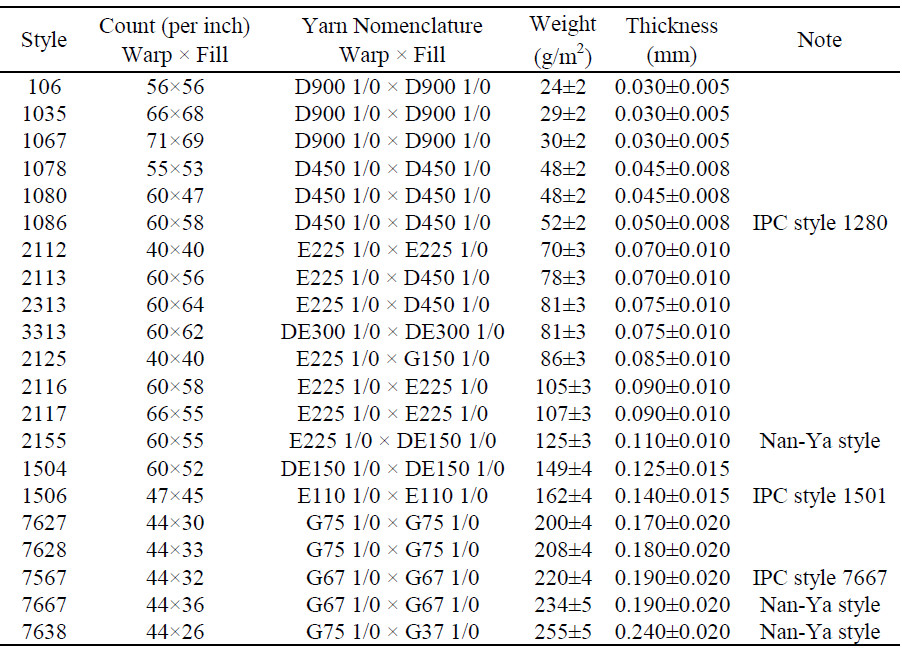
These numbers originate from the IPC-EG-140 standard, issued in 1988 by the IPC (Association Connecting Electronics Industries). This standard systematically classifies electronic‑grade glass fabrics. It is important to understand that these numbers themselves are not simple dimensional or thickness values; they are industry‑standardised “model codes.” Behind each code lies a specific weaving process, warp/weft yarn specifications, and structural characteristics of the fabric.
Glass fabric is the core backbone of copper‑clad laminates (CCL) and PCB prepregs. A unified specification system is required to ensure material compatibility – from upstream glass‑fiber manufacturers and mid‑stream CCL producers, to downstream PCB fabricators and even end‑product system integrators. After the IPC standard was established, these codes became a globally accepted language. Think of them like “shade numbers” in cosmetics – the number itself doesn’t represent centimetres or grams, but industry professionals immediately know what characteristics it signifies.
This standardised naming approach guarantees precision in material selection across the entire electronics supply chain, preventing production errors or impedance‑design deviations that could arise from manufacturer‑specific naming conventions.
In PCB manufacturing, the coarseness and thickness of the glass fabric directly affect the board’s mechanical strength, dielectric properties, and processability. As a general rule: the smaller the number, the finer the glass yarn and the thinner the fabric.

Below is an analysis of the most common electronic glass fabric specifications:
| Specification | Type | Approx. Thickness | Approx. Weight per Area | Characteristics | Applications | | :--- | :--- | :--- | :--- | :--- | :--- | | 7628 | Typical thick fabric | 0.173 mm (7 mil) | 204.4 g/m² | Thick yarn, high weave density, excellent mechanical strength, relatively low cost | Main dielectric for standard multilayer boards, thick boards, power boards, products requiring high dimensional stability but not thickness‑sensitive | | 2116 | Medium‑thick fabric | 0.094 mm (4 mil) | 102 g/m² | Balanced between thick and thin fabrics, good resin filling capacity and support | Standard insulation dielectric between inner layers of 4‑layer or 6‑layer boards | | 1080 | Typical thin fabric | 0.053 mm (2 mil) | 46.8 g/m² | Fine yarn, large adjustment range for resin content (RC%) | Fine‑line circuits, signal layers requiring strict impedance control, mid‑ to high‑end consumer electronics motherboards | | 3313 | Advanced thin fabric | Between 2116 and 1080 | – | Smooth weave, helps improve high‑frequency signal integrity | High‑speed computing boards, 5G communication equipment | | 1078 | Advanced thin fabric | Thinner than 1080 | – | Often uses flat glass process, smooth weave | High‑speed computing boards, 5G communication equipment – improves high‑frequency signal integrity | | 106 | Ultra‑thin fabric | Extremely thin | – | Ultra‑thin specification, can have very high resin content | High‑density interconnect (HDI) boards, smartphone motherboards, servers and other high‑end applications with strict size and weight constraints |
Note: In HDI processes where laser‑drilled microvias are required, coarse glass fabrics (such as 7628) are difficult for the laser to penetrate. Therefore, HDI boards almost always use thin fabrics like 1080 or 106.
When designing a stack‑up, we usually do not simply say “I want to use 1080.” Instead, we specify a complete designation such as “1080 RC67%”.
This is because a prepreg is composed of glass fabric + resin. “1080” refers to the fabric skeleton, while “RC67%” indicates the resin content of 67%.
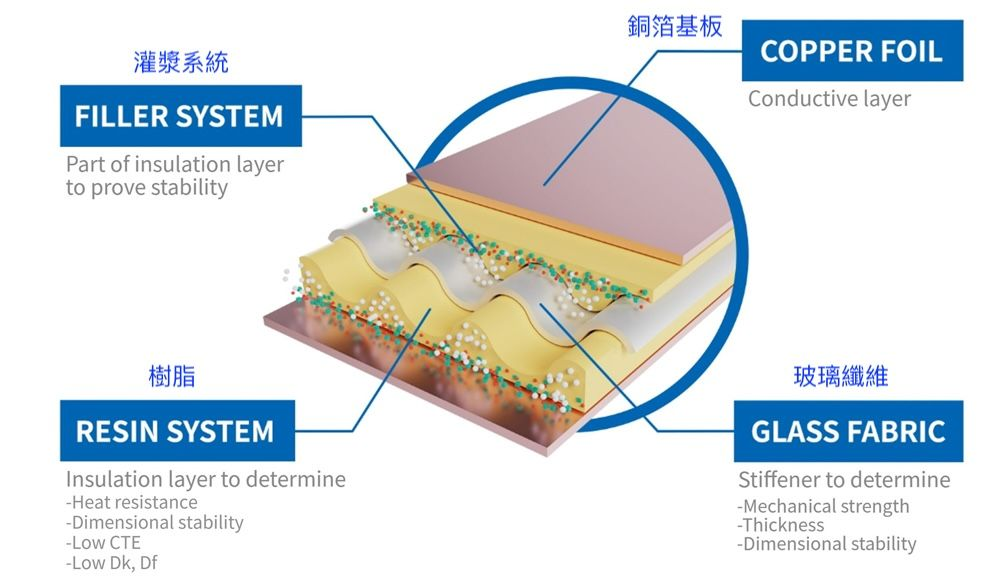 From a DFM (Design for Manufacturing) perspective, this point is crucial: During lamination, the resin in the prepreg melts and flows to fill the gaps between the inner‑layer copper traces. Consequently, the final thickness of the prepreg after lamination is not equal to its original thickness – it varies according to the “copper balance” (the amount of copper area) on the inner layers. Experienced PCB CAM engineers will calculate and select prepregs with different fabric codes and resin contents (e.g., a combination of 2116 + 1080) based on your copper balance and target impedance values, ensuring that the final board thickness and impedance fully meet the design specifications.
7628 represents robustness and economy; 1080 and 106 represent thinness and advanced technology. Understanding these IPC specification codes not only helps hardware engineers design stack‑ups with cost and yield awareness, but also smooths communication with board manufacturers regarding impedance control.
In the future, when planning PCB projects – whether you encounter stack‑up bottlenecks, impedance matching difficulties, or wish to verify whether your current prepreg combination is the most production‑efficient – the engineering team at YiYun Technology (eCloudPCB) is always ready to provide professional DFM reviews, working together with you to create an optimised manufacturing solution.