September 15, 2026
Why can a change in materials or stackup significantly affect a PCB quotation? As AI servers and high-speed switches evolve, engineering and purchasing teams in Taiwan face cost changes shaped by electrical performance, manufacturing requirements, and supply arrangements. Understanding these differences is more useful to product development teams than following record board prices. What matters to a project is whether the design passes validation and can subsequently be delivered consistently within an acceptable budget and schedule.
Taiwan’s AI hardware opportunities extend to the materials and circuit boards that carry signals. An ITIS industry analysis published through Taiwan’s Department of Industrial Technology identifies AI server interconnect requirements as a driver of copper-clad laminate and stackup upgrades.
On the materials side, ITEQ’s shareholder report identifies AI servers, high-speed switches, and next-generation high-speed interfaces as applications for ultra-low-loss materials. For Taiwan’s supply chain, these developments suggest that product value increasingly depends on material performance, manufacturing capability, and validation results. They do not establish that every PCB will become more expensive, nor do advanced AI board prices provide a reliable estimate for general-purpose control boards.
Materials and conductors contribute to loss as high-speed signals travel through a circuit board. More demanding channels require engineers to reassess signal integrity (SI), including the combined effects of traces, vias, and connectors.
ITRI’s introduction to high-speed AI server transmission technology also identifies low-dissipation-factor materials as a way to improve PCB insertion loss. Material selection should therefore begin with interface requirements, channel length, and the loss budget. Engineers can then specify the exact copper-clad laminate (CCL), dielectric thickness, and copper foil conditions.
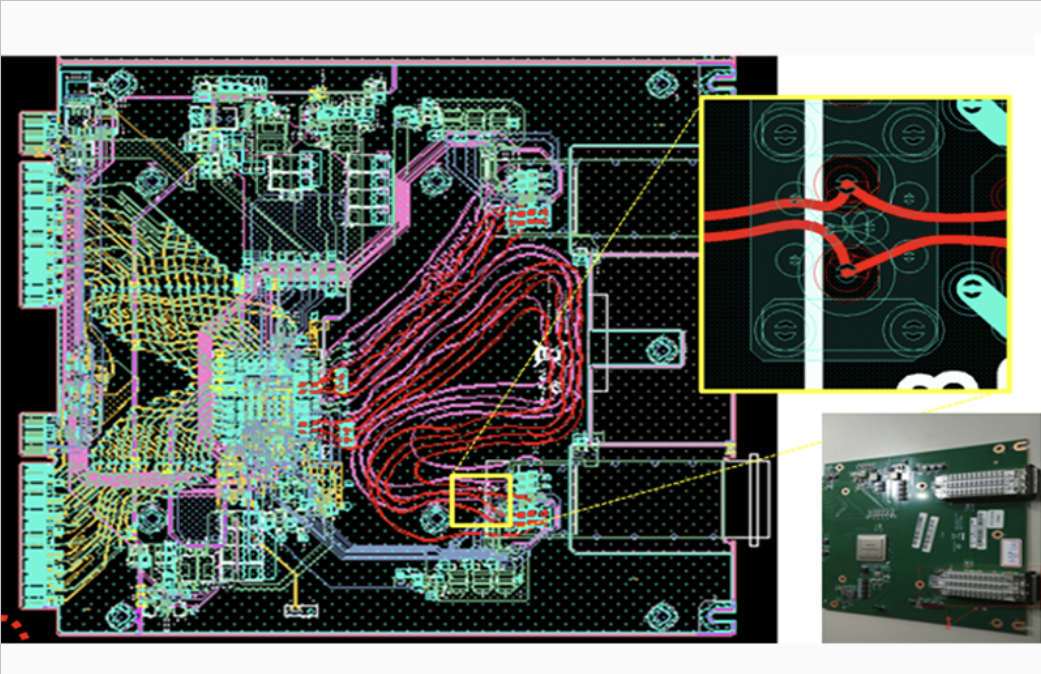 Even when the same low-loss material is used, a longer channel with more layer transitions requires its own assessment. When purchasing receives a proposed substitute, engineering should review the electrical and reliability requirements. An “equivalent grade” description alone does not establish interchangeability.
Quotation differences between high-layer-count boards involve more than additional material layers. Board thickness, hole diameter, interlayer connections, and processing tolerances can all change manufacturing difficulty.
Backdrilling, for example, reduces unused via barrel stubs. However, fabrication requirements must define the drilling direction, the layer that must not be cut, and the permitted remaining stub. TTM’s backdrill guideline includes these conditions in its fabrication documentation requirements. For engineering teams in Taiwan, a practical approach is to discuss design for manufacturability (DFM) with the fabricator before routing is finalized. Discovering an unsuitable via structure or tolerance only when requesting a quotation may require stackup and routing changes.
A supplier’s maximum demonstrated layer count also cannot replace a project assessment. Confirm whether the supplier can manufacture the specified combination of material, thickness, hole dimensions, and acceptance requirements.
Industry news helps identify direction, but sourcing decisions require information about actual materials and delivery requirements. When a quotation changes, ask the supplier whether the adjustment comes from materials, processing, quantity, or delivery timing before deciding how to respond.
If material availability is the cause, check the lead time for the specified thickness and copper foil combination. If process complexity is the cause, engineering should assess possible structural changes. Material substitution, design changes, and schedule adjustments address different problems.
When comparing quotations in New Taiwan dollars, use a consistent basis for tax, freight, engineering charges, and testing costs. A lower unit price does not necessarily mean a lower total project purchasing cost.
The following are recommended project checks. Actual specifications should be determined by design requirements and supplier capability.
| Item | Information engineering and purchasing should align | | :--- | :--- | | Electrical requirements | Interface, channel length, impedance, and loss targets | | Materials and stackup | Exact material designation, dielectric thickness, copper thickness, and substitute approval process | | Manufacturing conditions | Via structures, backdrilling, special processes, and critical tolerances | | Acceptance requirements | Electrical testing, impedance measurement, and project reliability validation | | Commercial conditions | Prototype and production quantities, lead time, included charges, and quotation validity |
After prototype completion, confirm whether production will retain the same materials and manufacturing conditions. Any changes should be agreed upon, including necessary revalidation, to avoid directly comparing quotations based on different manufacturing assumptions.
AI PCBs create opportunities for Taiwan’s supply chain through more demanding engineering requirements. For engineering and purchasing teams, defining specifications, processes, and acceptance criteria early provides a stronger basis for managing cost and delivery risk.
For an upcoming AI server or high-speed board project, prepare the stackup, material requirements, fabrication data, and estimated quantities as a starting point for discussing quotations and DFM questions with eCloud.