March 6, 2026
With the explosive growth in AI model scale, Nvidia and AMD's next-generation accelerators will face unprecedented thermal design power (TDP) challenges between 2026 and 2027. Single-chip power consumption reaching 2.3 kW transforms data center thermal management into a dual test of technology and materials. While liquid cooling effectively lowers PUE, it introduces entirely new physical, chemical, and mechanical challenges for PCBs and copper-clad laminates.
Global chip giants are entering an unprecedented arms race in computing power and power consumption in their next-generation AI accelerator architectures. For the Vera Rubin platform, slated for mass production by Nvidia in 2026, the TDP for a single GPU (GR100) is estimated to have surged from the original 1.8 kW to 2.3 kW, while simultaneously pushing the system data transfer rate for High Bandwidth Memory (HBM4) to 22.2 TB/s.
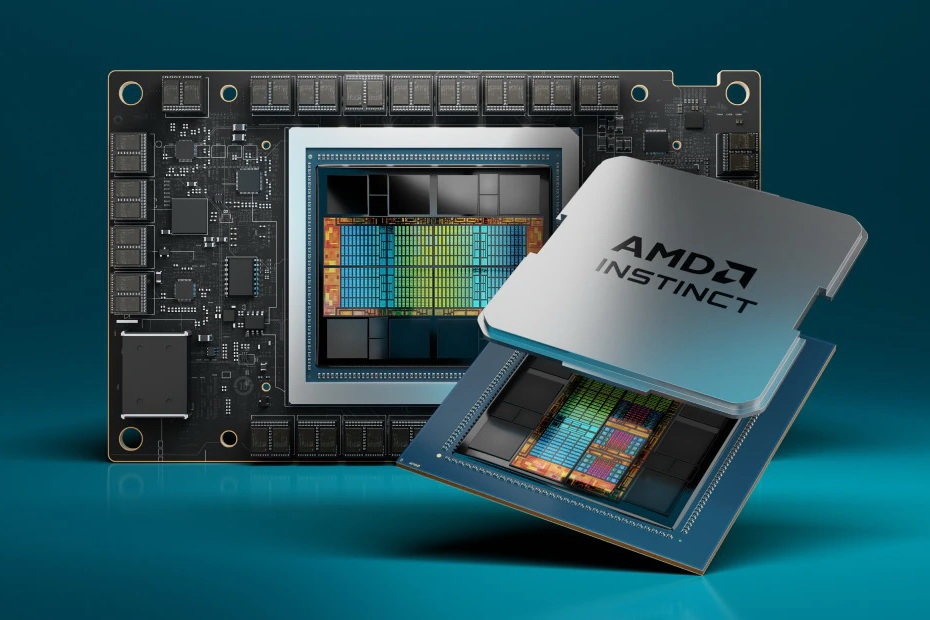
On the other hand, AMD's Instinct MI400 series (including the MI455X focused on large-scale training and the MI430X targeting high-performance computing), expected to launch in the second half of 2026, pushes HBM4 memory capacity to surpass competitors at 432 GB, providing a bandwidth of 19.6 TB/s, with a single chip TDP reaching an astonishing 1.7 kW.
When these extreme-power chips are integrated into rack-scale systems, the thermal challenges放大 geometrically. Taking Nvidia's planned VR300 NVL576 system as an example, a single rack will accommodate up to 576 Rubin GPUs, pushing the total rack power consumption beyond 600 kW. Similarly, AMD's Helios system, designed for大规模 clusters, integrates 72 MI400 accelerators per rack, facing equally extreme power and thermal density考验. Traditional air cooling technology loses its physical and economic feasibility when rack densities exceed 50 to 60 kW, directly driving data centers to全面 transition to liquid cooling architectures.
Table 1: Comparison of Nvidia and AMD Next-Gen AI Platform Specifications
| Platform Architecture | Estimated Mass Production | Single Chip TDP | Memory Configuration & Bandwidth | Rack-Scale System & Power Consumption | | :--- | :--- | :--- | :--- | :--- | | Nvidia Vera Rubin (VR200/VR300) | H2 2026 | ~2.3 kW | 288 GB HBM4 (22.2 TB/s) | NVL72 / NVL576 (>600 kW) | | AMD Instinct MI400 (MI455X/MI430X) | H2 2026 | ~1.7 kW | 432 GB HBM4 (19.6 TB/s) | Helios System (72 GPUs) |
Direct-to-Chip (D2C) liquid cooling is currently the most widely accepted solution. A micro-channel cold plate is directly attached to the GPU surface, dissipating heat through circulating coolant. However, this technology transfers significant mechanical and thermodynamic stress directly onto the interface between the mechanical structure and the PCB laminate.
To suppress heat at the 2.3 kW level, the high pressure and thermal cycles of the liquid cooling system impose substantial stress on the PCB. The Open Compute Project (OCP) specifications recommend that the mounting pressure for the cold plate be greater than 40 psi to ensure thermal conductivity. This sustained downward pressure, combined with extreme temperature cycling,极易引发 Coefficient of Thermal Expansion (CTE) mismatch, leading to PCB warpage, BGA solder joint cracks, and microvia fractures. This forces PCBs to全面 adopt advanced substrates with high rigidity, high modulus, and extremely low CTE.

Immersion cooling involves submerging the entire server in a non-conductive dielectric fluid. While solving localized hotspot issues, it presents severe challenges regarding PCB chemical compatibility. The biggest invisible killer is "Conductive Anodic Filament" (CAF) . In an immersion environment, if the fluid微量 degrades or absorbs moisture, it can significantly accelerate the migration of copper ions along the interface between the resin and glass fibers, leading to micro-shorts.
Therefore, the substrate resin must possess a very high Glass Transition Temperature (Tg), exceeding 170°C, to block copper ion migration paths. Furthermore, the PCB's surface solder mask (LPI) is prone to swelling or peeling after prolonged immersion in chemicals. Detached particles can clog the cooling system, causing equipment shutdown. The solder mask must use special formulations with extremely high cross-link density and strictly comply with the IPC-SM-840 Class H high-reliability standard.
Next-generation AI servers must not only manage high power dissipation but also handle the ultra-high-speed Signal Integrity demands of up to 224 Gbps PAM4 (4-Level Pulse Amplitude Modulation). This imposes extremely stringent limits on Insertion Loss, driving a deep technological revolution in Copper Clad Laminate (CCL) materials.
In the wave of material upgrades for AI servers, Taiwanese CCL and PCB suppliers have占据 a globally dominant position, leveraging their technological积累 in ultra-low loss and halogen-free high-frequency materials. Facing the challenges of liquid cooling and高速 transmission, Taiwanese manufacturers demonstrate highly advantageous market布局.
Table 2: Technology and Market Layout of Core Taiwanese PCB/CCL Suppliers
| Supplier (Ticker) | Core Technology Advantage | Liquid Cooling Compatibility & High-Speed Material Strategy | Global Market Positioning & Supply Chain Status | | :--- | :--- | :--- | :--- | | Taiwan Union (2383) | World's largest halogen-free CCL manufacturer, dominates M7/M8 grade ultra-low loss materials | Halogen-free配方 offers excellent chemical resistance, high Tg resists CAF, highly suitable for multilayer board liquid cooling designs | Captures majority of ASIC projects,核心 supplier for Nvidia GB200/300 and AWS/Meta | | Taiwan PCB Tech (6274) | Focuses on High-Speed Digital (HSD) and high-reliability backplane materials | ThunderClad series features low CTE and high Tg, withstands苛刻 thermodynamic and mechanical stresses of D2C | Widely used in 400G/800G switches and AI server OAM/UBB, strong gross margins | | Iteq (6213) | Drives PCIe Gen 5/6 upgrades, leading developer of fiber-free RCC materials | RCC technology eliminates glass fiber effect, blocks CAF physically, ideal for immersion cooling environments | Successfully penetrated Intel and AMD platforms, as well as AI server GPU OAM and CPU motherboard supply chains | | Nan Ya Plastics (1303) | Vertically integrates electronic-grade epoxy resin, copper foil, and high-end T-Glass fabric | Its T-Glass is certified, crucial for controlling warpage in high-layer PCBs and resisting immersion thermal shock | Holds pricing power over strategic materials, directly controls the咽喉 of the global high-end electronic material supply | | Co-Tech (8358) | Specializes in high-end specialty copper foil,具备 mass production capability for next-gen HVLP4 | HVLP4 surface roughness only 0.5-1.5μm, supports极限 signal transmission for cold plates, addressing skin effect | Breaks Japanese monopoly,产能 precisely fills the massive global HVLP4 supply-demand gap |
For frontline Taiwanese R&D engineers (RDs) and Product Managers (PMs) facing the next-generation liquid cooling architectures of 2026, product development thinking must undergo a fundamental shift:
"Thermo-Mechanical Coupled Stress Analysis" must be established as the highest design principle. As D2C cold plate assembly pressure exceeds 40 psi, traditional design流程 are no longer sufficient. R&D teams must integrate simulations early on to evaluate warpage risks for high-density HDI boards under极限 pressure and thermal cycles, and强制 adopt low-CTE (e.g., T-Glass) and high-modulus substrates to prevent BGA solder joint mechanical fatigue.
For immersion cooling projects, absolutely do not沿用 the BOM from the air-cooling era. All polymeric materials (including solder mask) in contact with the dielectric fluid must undergo long-term chemical compatibility testing according to OCP and ASTM D3455 standards. PMs should strictly require the solder mask to meet the IPC-SM-840 Class H standard to prevent system瘫痪 caused by swelling and peeling.
To meet 224G transmission, deploying M7/M8 grade CCL and HVLP4 copper foil is a hard requirement. Simultaneously, to mitigate CAF risks in liquid cooling environments, actively evaluate new halogen-free high-Tg resins from suppliers like Taiwan Union and Iteq, or consider introducing RCC materials for ultra-high-density OAM designs to physically切断 CAF growth paths. Furthermore, T-Glass and HVLP4 are likely to face severe shortages. PMs must secure strategic material reserves early with suppliers to ensure smooth volume production for high-value projects.
In summary, the thermal challenges of next-generation AI servers are driving a comprehensive upgrade in PCB material technology. The普及 of liquid cooling not only enhances energy efficiency but also imposes全新 requirements on the material supply chain and engineering design. Manufacturers and R&D teams that master high-frequency, high-speed, low-loss, and high-reliability materials will gain the decisive competitive advantage in the 2026 market.