August 24, 2026
The question PCB buyers ask most often is gradually changing. Instead of asking, “Can the price be reduced further?” more teams now want to know whether materials are available and whether the delivery date can be confirmed. This shift deserves attention from R&D, procurement, and project management teams. Cost pressure in the 2026 PCB market is not simply another short-term price cycle. It reflects the combined impact of AI server demand, limited capacity for critical materials, yield constraints on advanced products, and suppliers reallocating capacity toward higher-value applications. This does not mean that every PCB segment is experiencing a universal shortage. The tightest areas are advanced copper-clad laminates (CCLs), specialty fiberglass cloth, and manufacturing resources capable of supporting high-speed, high-layer-count, and large-format boards. Understanding this structural imbalance is more useful than attempting to predict the exact size of the next price increase.
One of the clearest changes in the 2026 PCB supply chain is the concentration of materials and capacity in higher‑value applications.
According to market information compiled by TrendForce, South Korea's CCL import price reached USD 20,728 per metric ton in March 2026, up 74.5% from USD 11,880 one year earlier. The same report noted that Kingboard Laminates raised prices for FR‑4 CCL and prepregs by another 10% in late April, marking its fourth price adjustment of the year.
These figures point to a broader change in material allocation:
| Supply‑chain change | Possible impact on PCB projects | | :--- | :--- | | Advanced materials prioritised for AI and high‑speed applications | Longer lead times or allocation constraints may affect other projects | | Higher CCL, copper foil, and fibreglass cloth costs | Shorter quotation‑validity periods | | Customers placing orders earlier and building safety stock | Greater volatility in the spot market | | Rising demand for large, high‑layer‑count boards | Tighter lamination, drilling, and specialty‑process capacity | | Suppliers allocating capacity based on account history | Commercial relationships and payment terms may influence scheduling priority |
Even when a standard FR‑4 material remains technically available, its historical price and lead time may no longer be sustainable. The challenge is not merely whether material exists, but whether the correct specification and quantity can arrive at the required time.
CCL is produced from materials including copper foil, resin, and electronic‑grade fibreglass cloth. In discussions about rising CCL prices, fibreglass cloth is often overlooked even though its capacity can be difficult to expand quickly.
 The E‑glass used in common electronics differs from the T‑glass and low‑dielectric fibreglass cloth required for AI servers, high‑speed switches, and advanced substrates. Advanced grades must provide low thermal expansion, dimensional stability, and suitable high‑speed transmission performance. Their glass composition, yarn production, weaving, and surface treatment all involve higher technical barriers.
TrendForce reports that Japan's Nittobo holds approximately 90% of the global T‑glass market and around 60%–70% of the NER‑glass market. Relevant new capacity is not expected to begin coming online until mid‑2027 at the earliest.
Advanced fibreglass cloth therefore faces three constraints that cannot be removed quickly:
The shortage cannot be reduced to the number of available looms. Glass formulation, electronic yarn availability, weaving equipment, process capability, qualification cycles, and production yield all affect actual supply.
AI infrastructure is an important driver of the current supply shift, but it would be misleading to interpret this as equal growth across the entire PCB market.
TrendForce forecasts that global AI server shipments will increase by more than 28% year over year in 2026 and exceed two million units. By comparison, total server shipments are forecast to grow by approximately 12.8%–13%. The impact of AI servers on PCB materials is driven by several architectural changes:
The increase therefore involves not only the number of PCBs, but also the amount of advanced material and specialised process capacity required by each system. When suppliers prioritise these products, other segments may experience indirect pressure even if their own end‑market demand remains relatively stable.
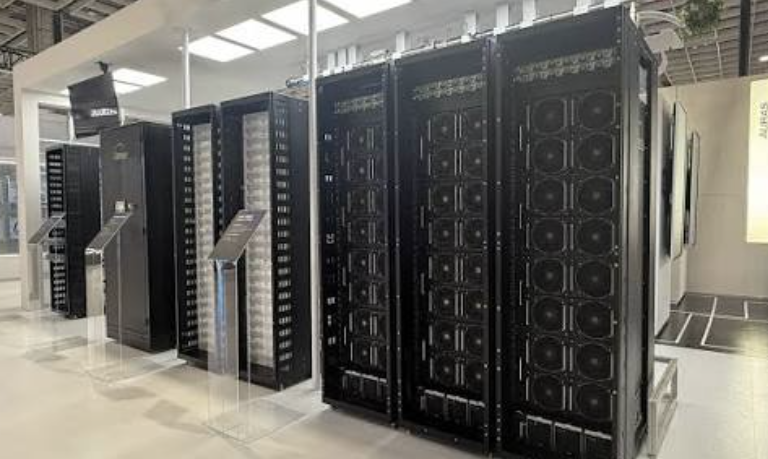
When a material producer announces an expansion, the market may assume supply and demand will soon return to balance. For electronic‑grade fibreglass cloth and advanced CCL, however, there is a substantial gap between announcing capacity and achieving reliable delivery.
A new production line normally must complete:
Equipment installation alone does not make a new material an immediate substitute for an existing qualified product. In high‑speed, high‑frequency, or high‑layer‑count PCBs, Dk, Df, glass weave, copper‑foil roughness, resin chemistry, and lamination behaviour can affect impedance, insertion loss, warpage, and reliability.
Procurement teams should therefore look beyond total announced capacity. They need to determine which material grade is being added, when it will be qualified, and whether it can support the project's stackup and electrical requirements.
The most effective response to structural material constraints is not panic buying. It is improving demand visibility and creating more design flexibility.
If a project has entered EVT, DVT, or mass‑production preparation, provide an estimated demand range for the next three to six months. A forecast does not have to be an inflexible purchase commitment, but it allows the PCB supplier to check CCL, prepreg, copper foil, and specialty‑material allocations earlier.
Do not wait until purchase‑order placement to discover that a material is unavailable. R&D and the PCB supplier should jointly review:
"Available for purchase" does not mean "interchangeable without review." Every substitution should receive an engineering assessment.
The lowest unit price should not be the sole supplier‑selection criterion. Material traceability, lead‑time visibility, alternative‑material capability, and early risk identification can have a more direct impact on whether a project ships on schedule.
When material costs change rapidly, a six‑month fixed quotation may no longer reflect actual procurement conditions. Buyers and suppliers can establish reasonable adjustment mechanisms tied to copper, CCL, or specified materials, together with clear terms for deposits, material reservation, and cancellation.
Before placing an order, identify the actual limiting factor:
| Review item | Question to confirm | | :--- | :--- | | CCL model | Is a specific brand and model mandatory? Is an equivalent material acceptable? | | Prepreg construction | Is a particular glass style constrained? Can resin content be adjusted? | | Thickness and layer count | Does the design require specialised lamination or thick‑board capacity? | | Copper foil | Does it require VLP, HVLP, or an even lower roughness grade? | | Electrical performance | Do insertion‑loss and impedance limits permit material substitution? | | Qualification | Would a material change require customer or end‑product requalification? | | Delivery schedule | Which quantities must ship on time, and which can be delivered in batches? |
The more complete the information, the more effectively a PCB supplier can reserve material and capacity before the delivery window becomes critical.
The cost pressure affecting PCBs in 2026 cannot be explained simply by saying that market demand is strong. Nor is every type of PCB experiencing the same shortage. A more accurate interpretation is that AI servers are rapidly absorbing advanced fibreglass cloth, low‑loss CCL, and specialised manufacturing capacity, while these supply segments remain slow to expand.
In this environment, a supplier's value extends beyond its quotation. Material visibility, engineering substitution capability, risk communication, and delivery management are becoming equally important.
For projects involving high‑speed transmission, high‑layer‑count boards, specified CCLs, or specialty fibreglass cloth, material‑availability and DFM reviews should begin during design and prototyping. The eCloud engineering team can assist with stackup evaluation, material specifications, substitution options, and manufacturing risks—helping teams identify cost and lead‑time issues before mass production begins.