January 14, 2026
For hardware R&D engineers (RDs) and mechatronics students in Taiwan, the most agonizing part of project development is often not the brain-burning process of circuit design, but the long, uncertain wait after sending out the Gerber files. In the electronics industry, where every second counts, the speed of PCB Prototyping often determines the first-mover advantage for a product launch, or even the life or death of a semester project. Why are some teams able to complete the "Design-Prototype-Verify" iteration in just one week, while your circuit board orders seem stuck in a manufacturing schedule black hole? This article delves into the internal processes of PCB factories regarding "expedited orders" and shares practical strategies for smoothly transitioning from prototyping to PCB Small-Batch Production.
If you type "PCB Prototyping," "Circuit Board Fabrication," or "Board Samples" into a search engine, you will find thousands of results. While these terms refer to the same thing, they reflect different user needs. Regardless of the keyword you use, the core pain point is the same: "Fast" and "Accurate."
In the traditional PCB procurement process, quoting takes a day, Engineering Questions (EQ) take another two days back-and-forth, and combined with production and logistics, two weeks can easily slip away. However, in the modern "Fast Track" model—adopted by digital management platforms like eCloud PCB—the PCB prototyping cycle can be compressed to an extreme 24 to 48 hours. This isn't just about saving time; it's about buying more opportunities for debugging during the EVT (Engineering Validation Test) phase.
Many engineers wonder how services claiming "24-hour shipping" actually pull it off. It's not just about operators running faster; it relies on highly automated digital engineering processes.
The moment you upload your Gerber file, while traditional factories are still manually checking layer counts and dimensions, smart platforms like eCloud PCB utilize backend CAM (Computer-Aided Manufacturing) software to complete a DFM (Design for Manufacturability) pre-check within minutes.
Once the files are confirmed (EQ Pass), urgent orders are flagged and sent into a dedicated "Fast Track":
Many students and startups face a common issue: The PCB prototype works perfectly, but when moving to a small-batch trial run of 500 or 1,000 units, yield rates drop, or assembly becomes difficult. This is known as the "Prototype Trap."
To achieve a seamless transition, you must introduce mass production thinking during the prototyping phase:
PCB prototyping often allows for loose tolerances or relies on senior technicians for manual adjustments. However, PCB Small-Batch Production relies on standardized processes.
If your PCB design involves USB, HDMI, or RF signals, ensure you request a TDR (Time Domain Reflectometry) Impedance Report during prototyping. Make sure the prototype shop and the mass production factory use the same Stack-up and dielectric materials (such as FR-4 or Rogers); otherwise, signal quality may deviate significantly during mass production.
Understanding the cost structure of PCBs helps you control budgets during the design phase. The cost of PCB small batches consists of three main parts:
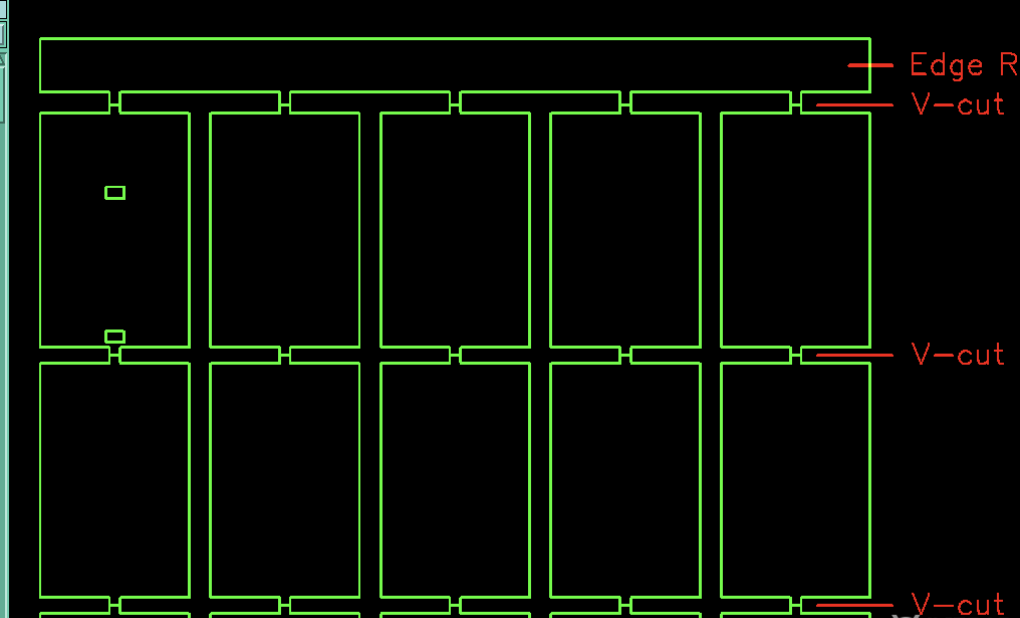
| Cost Item | Description | Quantity Impact | | :--- | :--- | :--- | | Engineering Fee (NRE) | CAM processing, film costs, test program fees. | Fixed Cost. Very high percentage for small quantities; negligible when amortized over large volumes. | | Test Fixture Fee | Traditional bed-of-nails testing (ICT) requires custom fixtures. | One-time high cost. For prototyping, use fixture-free "Flying Probe Testing," which takes longer per board but saves thousands in fixture fees. | | Unit Price | Includes laminate material, drilling, plating, etc. | Decreases with quantity. Panelization efficiency is key; poor panel design leading to waste material will significantly increase the unit price. |
Expert Tip: When requesting a quote for PCB prototyping, don't just look at the sample fee. Ask the vendor to provide an estimated quote for "500-piece small batch production" as well. You will see that as quantity increases and NRE is amortized, the cost per unit drops exponentially.
Among many suppliers, eCloud PCB focuses on solving the pain points of engineers in PCB prototyping and small-batch production:
Hardware development is a race against time. Choosing a partner who offers fast, transparent, and high-quality services allows you to lead the competition right from the starting line. Whether you are a student rushing a final project or an RD engineer under pressure to launch, PCB prototyping should not be your bottleneck—it should be your accelerator.
Ready to accelerate your development process?
Visit the official website at https://www.ecloudpcb.com immediately to experience the smart quoting system calculated in seconds, and turn your ideas into reality within 48 hours!