Below are the full English acronyms for OEM, ODM, and OBM along with their core definitions:
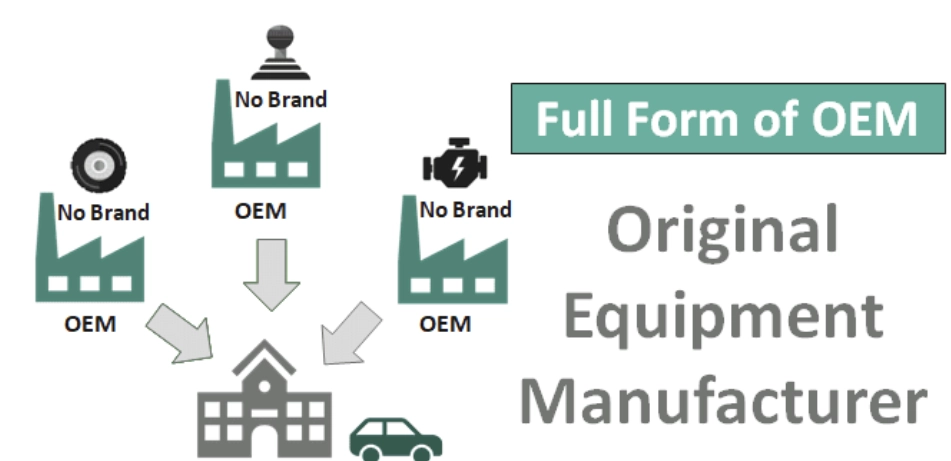
1. OEM - Original Equipment Manufacturer
- Chinese Name: 原始設備製造商
- Core Interpretation: "Contract Manufacturing"
Model Description:
- OEM manufacturers specialize in product production based on design drawings, specifications, and technologies provided by another company (brand owner).
- The manufactured products are ultimately sold under the brand owner's trademark and brand.
- Key Point: Design rights belong to the brand owner; OEM is only responsible for manufacturing.
2. ODM - Original Design Manufacturer
- Chinese Name: 原始設計製造商
- Core Interpretation: "Design Contract Manufacturing"
Model Description:
- ODM manufacturers not only handle production but also provide product design services.
- Brand owners can select from ODM manufacturers' existing product design solutions or request minor adjustments, then sell under their own brand.
- Key Point: Design rights belong to the ODM manufacturer; brand owners may only be "rebranding."
3. OBM - Original Brand Manufacturer
- Chinese Name: 原始品牌製造商
- Core Interpretation: "Own Brand Manufacturing"
Model Description:
- OBM manufacturers create and own their brands, independently responsible for all aspects including product design, production, marketing, and sales.
- They either don't do contract manufacturing for other brands or operate their own brands separately from their contract manufacturing business.
- Key Point: Owns proprietary brands and controls all aspects of the value chain.
Simple Summary
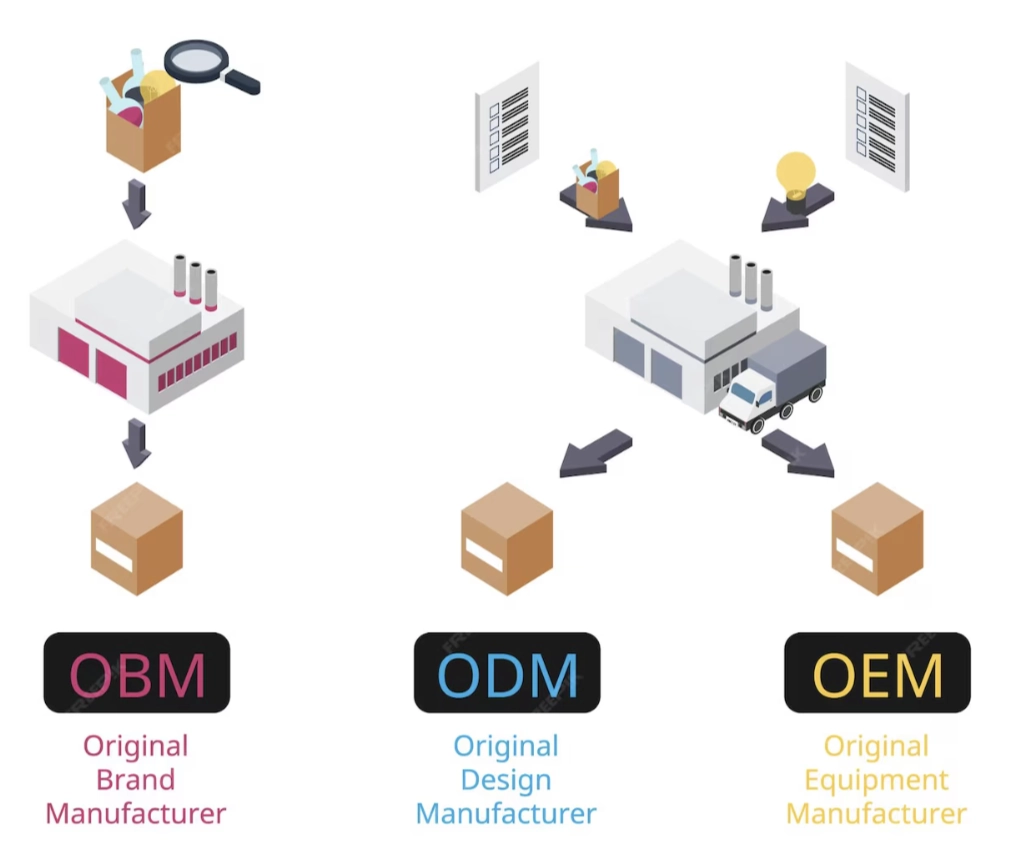
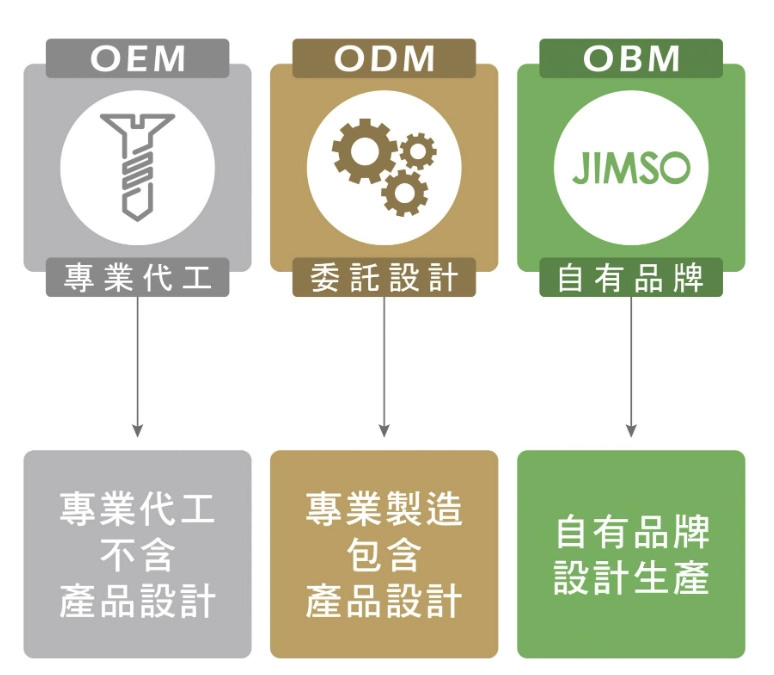
- OEM: You design, I manufacture.
- ODM: I design and manufacture, you rebrand and sell.
- OBM: I design, manufacture, and sell under my own brand.
01 Technical Application Differences Among Three Models
In the PCB manufacturing field, OEM, ODM, and OBM models demonstrate distinct technical application characteristics that directly determine their product direction and market positioning.
1. OEM (Original Equipment Manufacturer): Focus on Process and Capacity
OEM manufacturers focus on pure production manufacturing, with technical applications mainly concentrated on process implementation and mass production. The technical emphasis is on accurately realizing customer-provided design specifications while ensuring stable quality and large-scale delivery capability.
2. ODM (Original Design Manufacturer): Integrated Design and Manufacturing
ODM manufacturers add design services to manufacturing, resulting in more diverse technical applications. They need to master the entire process technology from conceptual design to finished product manufacturing, including expertise in PCBs with different layer counts.
Technical Characteristics:
- Double-layer vs. Multi-layer Board Technology:
- Double-layer Boards: Use vias to achieve electrical connections between layers, improving circuit complexity and component density.
- Precision Multi-layer Boards: Involve High Density Interconnect (HDI), microvias, blind vias, and buried via technologies, requiring extremely high processing precision and process control.
3. OBM (Original Brand Manufacturer): Brand-Oriented and Technology Innovation
OBM manufacturers' technical applications are completely driven by brand value and market demands. They not only need to master design and manufacturing technologies but also deeply understand end-user requirements, making technological innovation a core element of brand differentiation.
Technical Pursuits:
- Pursuit of Ultimate Process Capability:
- OBM manufacturers may invest more resources in developing 3/3 mil line width/spacing manufacturing capabilities.
- Some may advance to 2/2 mil ultra-precision levels—a significant technological leap requiring strong overall factory capabilities for support.
02 Core Differences: From Contract Manufacturing to Brand Creation
These three models have fundamental differences in business structure, technical focus, and value chain position, forming an evolutionary path from contract manufacturing to brand creation.
1. Business Structure and Design Involvement
OEM:
- Conduct product development and manufacturing according to brand company contracts.
- Business units typically bypass design units and directly interface with manufacturing units.
- No relevant design strategy applications, representing simple cooperative production.
ODM:
- Goes further than OEM, with manufacturers possessing R&D technology and even ready-made products.
- Non-autonomous ODM: Provide product concept designs based on customer requirements, mostly modifying existing products using imitation and differentiation strategies.
- Autonomous ODM: Manufacturers proactively develop products, using leading and advantage strategies to create trends for customers, attracting procurement.
OBM:
- Represents a qualitative leap. Companies must register trademarks, develop markets, and actively develop products.
- Use leading and advantage strategies to create buzz for their own brands.
2. Value Chain Position
- OEM: At the lowest end of the value chain, mainly relying on scale effects and cost control for profits.
- ODM: Enhanced value capture capability through design services.
- OBM: Occupies the highest end of the value chain through brand operations.
Industry Perspective: The progression from OEM to ODM to OBM is typically viewed as a development model and evolutionary stage for enterprises, representing an inevitable choice for pursuing sustainable development and higher profit models.
03 Control Points: Accurately Grasping Each Model's Core
Different business models require different management control focuses; accurately grasping these points is key to successful business operations.
1. Design and Development Management
- OEM / Non-autonomous ODM: Focus on efficiency and responsiveness under customer pressure to reduce costs and time. Products mostly involve minor adjustments to existing architectures with conservative strategies.
- Autonomous ODM / OBM: Focus on innovation and trend leadership. OBM product development prioritizes attracting consumer attention, requiring advantage strategies to create brand buzz.
2. Production Organization and Processes
- Repetitive Functional Organization (OEM & Non-autonomous ODM): Suitable for this organizational form due to straightforward requirements and clear development directions, ensuring execution efficiency.
- Collaborative Development Lightweight Matrix Project Organization (Autonomous ODM & OBM): Suitable for matrix organizational structures for cross-departmental collaboration to reduce communication blind spots, as companies need to control and plan development directions themselves.
3. Supply Chain and Cost Control
For small and medium-sized PCB enterprises, engineering optimization and order consolidation new production models can be adopted:
- Method: Consolidate all orders under 10 square meters, including orders with different process requirements, surface treatments, and solder mask colors.
- Benefits: Compared to traditional "single market order corresponds to single production number" models, consolidated production can significantly reduce CAM engineering data processing time and improve overall efficiency.
04 Quality Control: Different Focuses for Different Models
Under different models, quality control (QC) focuses and methods also show significant differences.
1. OEM Model: Focus on Process Reliability
- Focus: Particularly emphasizes production and manufacturing issues.
- Key: The effectiveness of In-Process Quality Control (IPQC) is especially crucial. As PCBs serve as carriers for all electronic components, their fundamental reliability is paramount.
2. ODM Model: Balancing Timeliness and Quality
- Non-autonomous ODM: Focus on timeliness during the design phase. Due to customer pressure to reduce costs and time, manufacturers must quickly respond to customer needs while ensuring quality.
- Autonomous ODM: Particularly emphasizes analysis and planning during the conceptual phase to ensure product design maturity.
3. OBM Model: Comprehensive Quality Assurance
- Focus: Has the most comprehensive quality requirements because they directly face end consumers, and quality performance directly affects brand reputation.
- Strictness: A single PCB board might be scrapped or have potential failures due to a fine hair or tiny dust particle. Therefore, OBM manufacturers must establish comprehensive quality assurance systems with extremely low error tolerance.
05 Transformation Path: From Manufacturing to Creation
For many enterprises, the progression from OEM to ODM to OBM represents a natural evolutionary path, but this transformation is not easy.
Transformation Challenges
- Product Development Management Differences: The biggest difference when transitioning from OEM or ODM business operations to OBM operations lies in the need to particularly emphasize design strategy and conceptual phase planning in product development processes.
- Resource Restructuring: OBM-transforming enterprises must reconfigure resources and strengthen design and marketing capabilities.
- Organizational Form Transformation: Mature enterprises are often "dumbbell-shaped enterprises"—very strong in both technology and market ends, while the middle manufacturing portion is partially or fully outsourced.
- Market Tracking: OBM manufacturers should invest more resources in continuously tracking post-launch product performance as market feedback for future next-generation products.
Summary and Analysis
Through the above content, we can clearly see that OEM, ODM, and OBM are three progressively advanced and distinctly positioned business models.
1. Different Value Creation Paths
- OEM: Creates value through standardized and scaled refined management, with core competitiveness in "doing better, cheaper, faster."
- ODM: Creates value through technology and design services, with core competitiveness in "being able to design and manufacture competitive products," saving customers R&D costs and time.
- OBM: Creates value through brand value and market insight, with core competitiveness in "knowing what the market wants and being able to sell it through brand appeal."
2. Different Depth and Breadth of Technical Applications
- OEM: Technical applications are "deep," focusing on the manufacturing process itself, striving for perfection in single links.
- ODM: Technical applications are "broad," needing to span multiple fields including design, materials, processes, and testing, with strong integration capabilities.
- OBM: Technical applications are "leading," not only focusing on existing technologies but also looking at future technology trends and transforming them into unique product selling points.
3. Different Risk and Return Balances
- OEM: Lowest risk (order-driven, no inventory or R&D risks) but thinnest profits, easily falling into price competition.
- ODM: Medium risk (requires R&D investment but shared by multiple customers), higher profits than OEM, but development constrained by downstream brand customers.
- OBM: Highest risk (requires investment in brand building, market promotion, facing market uncertainty directly), but once successful, can achieve the highest brand premium and profit margins.
Conclusion
For PCB enterprises, choosing which model is not fixed but rather a comprehensive decision based on their development stage, resource endowment, and strategic vision. Many successful Chinese enterprises have followed a transformation and upgrading path from OEM (learning manufacturing) to ODM (mastering technology) to OBM (creating brands). Regardless of the chosen path, the key lies in building core capabilities matching the model and becoming irreplaceable in the corresponding value chain links.